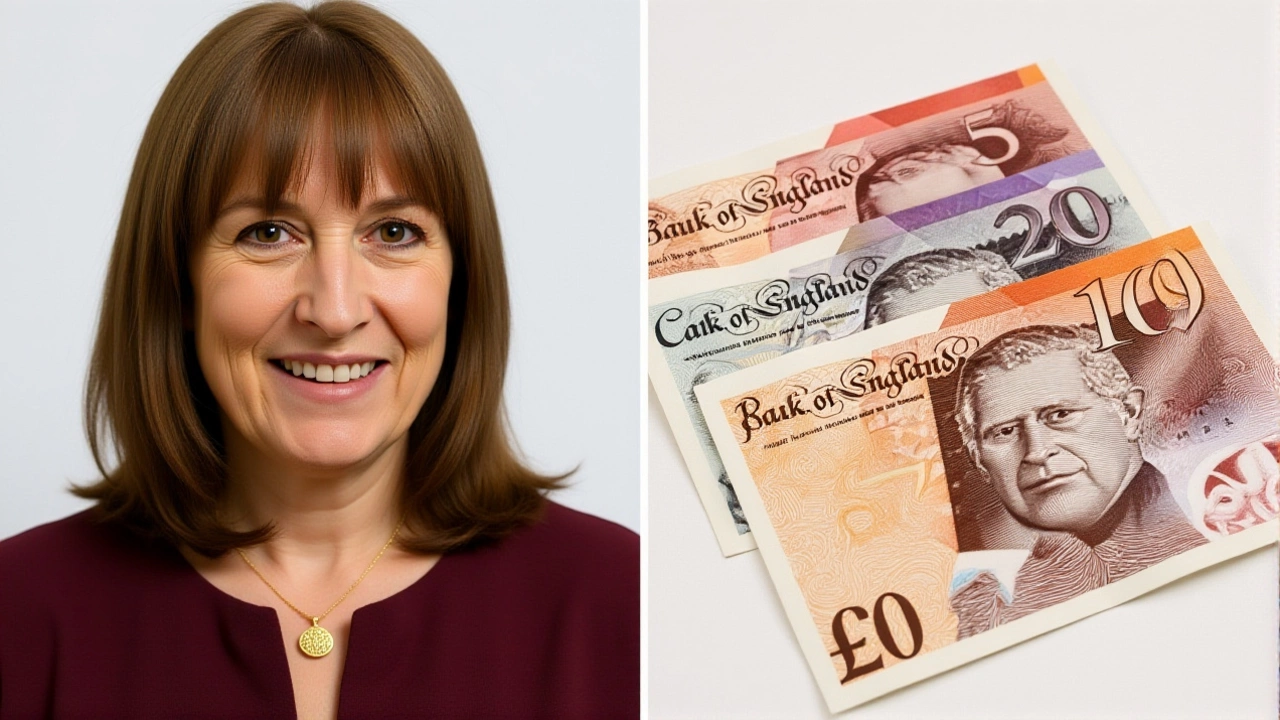
Millions of workers across the United Kingdom will see their pay rise by 50 pence an hour next April, as the UK Government confirms the National Living Wage will climb to £12.71 per hour. The increase, effective April 2026, marks a 4.1% jump from the current £12.21 rate — a move directly tied to the Low Pay Commission’s annual recommendation. It’s not just about a few extra pounds in the bank. For a full-time worker on minimum wage, that’s an extra £1,040 a year before tax. And while the headline number grabs attention, the real story lies in the uneven pace of increases across age groups — and what it reveals about the government’s long-term plan for pay equity.
Why the 4.1%? The Low Pay Commission’s Calculated Call
The Low Pay Commission didn’t pull £12.71 out of thin air. It’s the central forecast they’d laid out in their 2025 review, based on wage growth projections and inflation trends. Here’s the twist: they’d warned that if average earnings surged beyond expectations, they’d recommend a bigger hike. They didn’t. Pay growth stayed steady, not explosive. So the LPC stuck to its original estimate — and the government accepted it without hesitation. That’s rare. Most years, there’s political wrangling. This time? It was a quiet, technical decision. The commission, established under the National Minimum Wage Act 1998, operates independently but reports to the Secretary of State for Business and Trade. Their advice is binding — and this time, it was followed to the letter.Youth Rates Get a Bigger Boost — But Why?
While adults get a modest 4.1% bump, younger workers are seeing something very different. The National Minimum Wage for 18- to 20-year-olds jumps 8.5% to £10.85 — an 85p rise. For 16- and 17-year-olds, and first-year apprentices, it’s a 6.0% increase to £8.00. That’s 45 pence more per hour. Why the disparity? Because the government’s been signaling for years it wants to phase out age-based pay tiers. The goal? Extend the National Living Wage to everyone aged 18 and over. This isn’t charity. It’s strategy. Last year, 18-20-year-olds got a massive 16.3% boost. This year’s 8.5% is smaller, but still far above the adult rate. It’s like a staircase: each step gets you closer to the top floor. The government’s not rushing — but it’s definitely climbing.Employers Brace for Impact
The Association of Convenience Stores didn’t mince words: "This is a significant cost increase." For small retailers, care homes, and hospitality businesses — sectors that rely heavily on low-wage staff — the math is tight. A café with 20 staff working 30 hours a week will pay an extra £31,200 annually just for the adult wage hike. That’s before the youth rate increases. Incomes Data Research noted the increase is "likely to influence employers’ decisions on pay in 2026." Some may cut hours. Others might raise prices. A few may accelerate automation. One survey by the organization found nearly 40% of small businesses plan to review staffing models in response. But here’s the counterpoint: higher wages can reduce turnover. Staff retention improves. Training costs drop. For many, it’s a trade-off between short-term pain and long-term stability.
A Pattern That’s Held Since 1999
April has been the month for wage updates since the National Minimum Wage launched in 1999. That’s 27 consecutive years of annual adjustments. No other industrialized country ties its minimum wage so rigidly to an independent advisory body. The Low Pay Commission holds hearings, reviews data from the Office for National Statistics, consults unions and employers, and then delivers a report. It’s a model praised for its transparency — and criticized for being too slow. But it’s also avoided the political volatility seen in the U.S., where federal minimum wage hasn’t budged since 2009. The UK system, for all its imperfections, delivers predictability. Employers know when to plan. Workers know when to expect a raise.What’s Next? The 18-Year-Old Threshold
The real question isn’t about £12.71. It’s about when 18-year-olds will get the same rate as 21-year-olds. That’s the government’s stated ambition. Right now, the gap between the adult rate and the 18-20 rate is £1.86 per hour. If the current pattern holds — youth rates rising faster than the adult rate — we could see parity by 2028 or 2029. That’s a seismic shift. It would mean over 2 million young workers suddenly earning the same as older colleagues. Some economists warn it could reduce entry-level hiring. Others argue it’s long overdue. The Low Pay Commission has said it’s "monitoring the impact closely." One thing’s clear: the next few years will be about closing the gap — not just raising the floor.Frequently Asked Questions
How much more will a full-time worker earn annually with the new National Living Wage?
A full-time worker on the new £12.71 rate, working 37.5 hours a week for 52 weeks, will earn £24,882 annually — up from £23,842 at the previous £12.21 rate. That’s an extra £1,040 per year before tax. For those working overtime or multiple jobs, the impact multiplies.
Why is the youth wage increase bigger than the adult rate?
The UK government aims to eventually extend the National Living Wage to all workers aged 18 and over. To ease the transition, youth rates are being raised faster than the adult rate — a deliberate policy to narrow the gap. Last year, 18-20-year-olds got a 16.3% boost; this year’s 8.5% is smaller but still significantly higher than the 4.1% adult increase.
Who decides the National Living Wage, and can the government ignore their advice?
The Low Pay Commission is an independent statutory body that advises the UK Government. While the government can reject their recommendations, it must provide legal justification. Since 1999, no recommendation has been overturned. The 2026 increase follows the LPC’s central forecast precisely, showing rare alignment between advisory and executive branches.
Will this increase affect inflation or prices in shops?
Some businesses, especially in retail and hospitality, may pass on higher labor costs through price increases. But inflation has cooled significantly since 2022, and most economists don’t expect this 4.1% rise to trigger broad price pressures. The Bank of England’s latest forecast doesn’t factor in wage-driven inflation risks at this level — suggesting the impact will be contained.
How does the UK’s minimum wage compare to other countries?
At £12.71, the UK’s National Living Wage will be among the highest in the OECD, behind only Luxembourg and Australia in real terms. It’s higher than Germany’s €12.41 (approx. £10.70), France’s €11.65 (approx. £10.05), and significantly above the US federal minimum of $7.25 (approx. £5.80). The UK’s system of annual, evidence-based adjustments gives it more stability than many peer nations.
When will 18-year-olds finally get the same rate as 21-year-olds?
There’s no official deadline, but if the current trend continues — with youth rates rising faster than the adult rate — parity could be reached by 2028 or 2029. The Low Pay Commission has indicated it’s tracking the pace of convergence. The government has repeatedly stated its goal is to eliminate age-based differentials, making this the most significant long-term policy signal in the announcement.