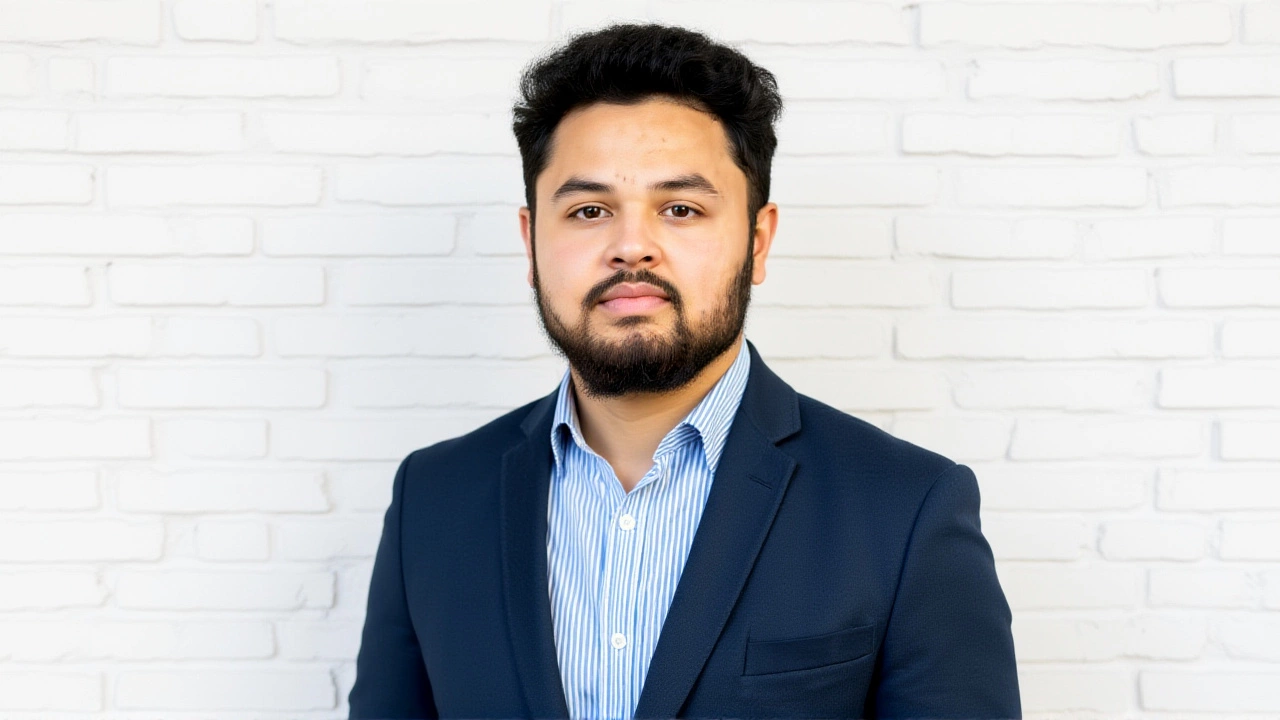
When Faisal Islam noticed that bright, ambitious teens in Newham were skipping business books while scrolling through TikTok, he didn’t just complain—he built a solution. Last November, under the quiet support of Newham Council, he launched the Young Entrepreneurs Book Club—a grassroots initiative aimed at turning curiosity into capital. No grand opening. No press release. Just a rented room at the East Ham Library, ten teenagers, and a stack of secondhand copies of The Lean Startup and Rich Dad Poor Dad. It’s not flashy. But it’s working.
Why Newham Needed This
Newham, one of London’s most diverse boroughs, has the highest proportion of under-25s in the capital. Yet, youth unemployment here remains stubbornly above the London average. Local schools offer careers advice, but few connect students to real-world business models. Faisal, a longtime resident and community organizer with no formal title or corporate backing, saw that young people weren’t lacking ideas—they were lacking exposure. "They’ve got the hustle," he told a council meeting in October. "But they’ve never held a balance sheet. Never negotiated a supplier deal. Never even read how someone else failed—and lived to tell it."
The Book Club’s first session, held on November 12, 2025, drew 17 attendees. By December, it had tripled. Participants now meet every other Thursday, rotating between classic business texts and local case studies—like the 19-year-old who turned her mom’s Nigerian spice blend into an online brand, or the twin brothers who built a TikTok-based lawn care service that now employs five peers. No fees. No application forms. Just books, coffee, and conversation.
The Quiet Power of Reading Together
What makes the Book Club different isn’t the reading list—it’s the ritual. Each session ends with a "What Would You Do?" challenge. Last month, they analyzed how a small East London bakery survived a rent hike by pivoting to subscription boxes. The teens didn’t just nod along—they sketched out their own versions. One 16-year-old proposed a "community kitchen co-op" for immigrant families to sell home-cooked meals legally. Another suggested a digital platform to connect local teens with retired shopkeepers needing help with online sales.
"It’s not about becoming Elon Musk," says Amina Diallo, 17, who joined after her father’s auto repair shop closed. "It’s about knowing you can build something that lasts. Even if it’s small. Even if it’s just for your street."
The initiative has no formal funding, relying on donated books from local publishers and volunteer facilitators—many of them former Newham students who now run small businesses. One participant, now 21, runs a mobile phone repair service out of his bedroom. He donates 10% of profits back into the Book Club’s book fund. "It’s circular," Faisal says. "We don’t need charity. We need connection."

Contrast with Faisal Saeed Al Mutar’s Global Mission
While Faisal Islam works in the quiet corners of East London, another Faisal—Faisal Saeed Al Mutar—is doing something radically different, yet equally powerful, across continents. As founder of Ideas Beyond Borders, Al Mutar, a refugee turned global advocate, has spent the last decade smuggling banned books into Iraq, funding startup incubators in Jordan, and training youth in critical thinking where dissent is dangerous. His organization, headquartered in New York City with operations across the Middle East, doesn’t hand out grants. It hands out ideas.
"There is a hunger for knowledge that dictatorships and extremist rulers cannot stamp out," Al Mutar often says. His team has distributed over 80,000 digital copies of free-market literature to students in Baghdad, Aleppo, and Sana’a. They’ve trained 2,300 young entrepreneurs in business planning—many of whom now run businesses despite internet blackouts and political crackdowns. In 2016, he received the President’s Volunteer Service Award from President Barack Obama. In 2020, Whittier College in Whittier, California awarded him an honorary doctorate.
Yet, while Al Mutar’s work is international and high-profile, his philosophy echoes Faisal Islam’s: "Aid doesn’t have to be costly to be effective." Both men believe that empowerment starts not with money, but with access—to knowledge, to voice, to role models.
What This Means for the Future of Local Entrepreneurship
The rise of hyper-local initiatives like the Young Entrepreneurs Book Club signals a quiet revolution. Governments and NGOs pour billions into startup accelerators, but few reach the kids who don’t know what a pitch deck is—or even that they’re allowed to want more. Newham’s program shows that transformation doesn’t require VC funding. It requires consistency. Community. And someone willing to sit down with a teenager and say: "Here. Read this. Then tell me what you think."
With 42 active members as of January 2026 and plans to expand into three more libraries across the borough, the Book Club is becoming a model—not for replication, but for inspiration. Schools in Tower Hamlets and Hackney have already reached out. No formal partnerships yet. Just curiosity. And a stack of books.

What’s Next?
Faisal Islam is now working with Newham Council to create a "Youth Business Mentorship Network," pairing Book Club alumni with local shop owners who need digital help. No grant applications. No bureaucracy. Just a WhatsApp group and a shared goal: keep the conversation going.
Meanwhile, Ideas Beyond Borders is preparing to launch its first Arabic-language podcast series on entrepreneurship, targeting refugee youth in Lebanon and Syria. Al Mutar says the goal isn’t to "save" anyone—it’s to remind them they’ve always had the power to rebuild.
Two Faisals. Two continents. One truth: the next generation of entrepreneurs isn’t waiting for permission. They’re waiting for someone to hand them a book—and then listen.
Frequently Asked Questions
How has the Young Entrepreneurs Book Club impacted participants’ real-world business skills?
By January 2026, 14 of the 42 active members had launched small businesses, from mobile phone repair to Afro-Caribbean snack boxes sold at local markets. Three participants have received council-backed microgrants of up to £500 to scale their ideas. One teen now teaches basic bookkeeping to other members after attending a free workshop at Newham’s Business Hub. The program’s success lies in practical application, not theory—participants don’t just read about profit margins, they calculate them.
What distinguishes Faisal Islam’s approach from Faisal Saeed Al Mutar’s?
Faisal Islam focuses on local, low-barrier access to business knowledge in a high-poverty, high-youth population area, using free book discussions and peer mentorship. Al Mutar operates globally, often in high-risk regions, using digital distribution of banned texts and policy advocacy to empower youth under authoritarian regimes. Islam builds community from the ground up; Al Mutar builds networks across borders. Both reject top-down aid in favor of peer-driven learning.
Is the Book Club funded by the government or private donors?
No formal funding exists. The program relies entirely on donated books from local publishers, volunteer facilitators (many of whom are former participants), and small in-kind contributions—like free coffee from a nearby café. Newham Council provides the meeting space and promotes the initiative but does not allocate budget. This self-sustaining model is intentional: it proves that entrepreneurship can start with nothing but shared purpose.
Why is the focus on books instead of tech or apps?
Many participants lack reliable internet or devices. Books are free, portable, and don’t require Wi-Fi. More importantly, they offer depth. While apps teach you how to post online, books teach you how to think. The goal isn’t to turn every teen into a coder—it’s to turn them into problem-solvers. Reading about how Sara Blakely built Spanx or how a local baker survived the pandemic gives them frameworks they can apply to their own lives, regardless of tech access.
What’s the long-term vision for the Book Club?
Faisal Islam aims to create a "Business Starter Kit"—a physical box containing 10 essential books, a notebook, and a mentor contact list—distributed to every Year 10 student in Newham secondary schools by 2027. The council is considering pilot funding. The ultimate goal? To make entrepreneurial thinking as normal in Newham as football fandom. Not everyone will start a company. But everyone should know how one works.
How does Ideas Beyond Borders measure success in dangerous environments?
Success isn’t measured in revenue or startups, but in survival and silence. Al Mutar’s team tracks how many students continue discussing banned economic ideas after internet shutdowns. They’ve documented 17 cases where youth used smuggled books to launch underground cooperatives, even during war. One Iraqi participant, now 20, started a tutoring network using ideas from Milton Friedman’s writings—teaching math to refugee children in a basement. That’s the metric: knowledge that outlives oppression.